“Shifting the Energy on Court–“
Yuka Yamamoto: Confidence, Connection, and Playing with Heart
Interviewer: Staff – Aoki / Interviewee: Yuka Yamamoto / Translated by: Staff – Masuda
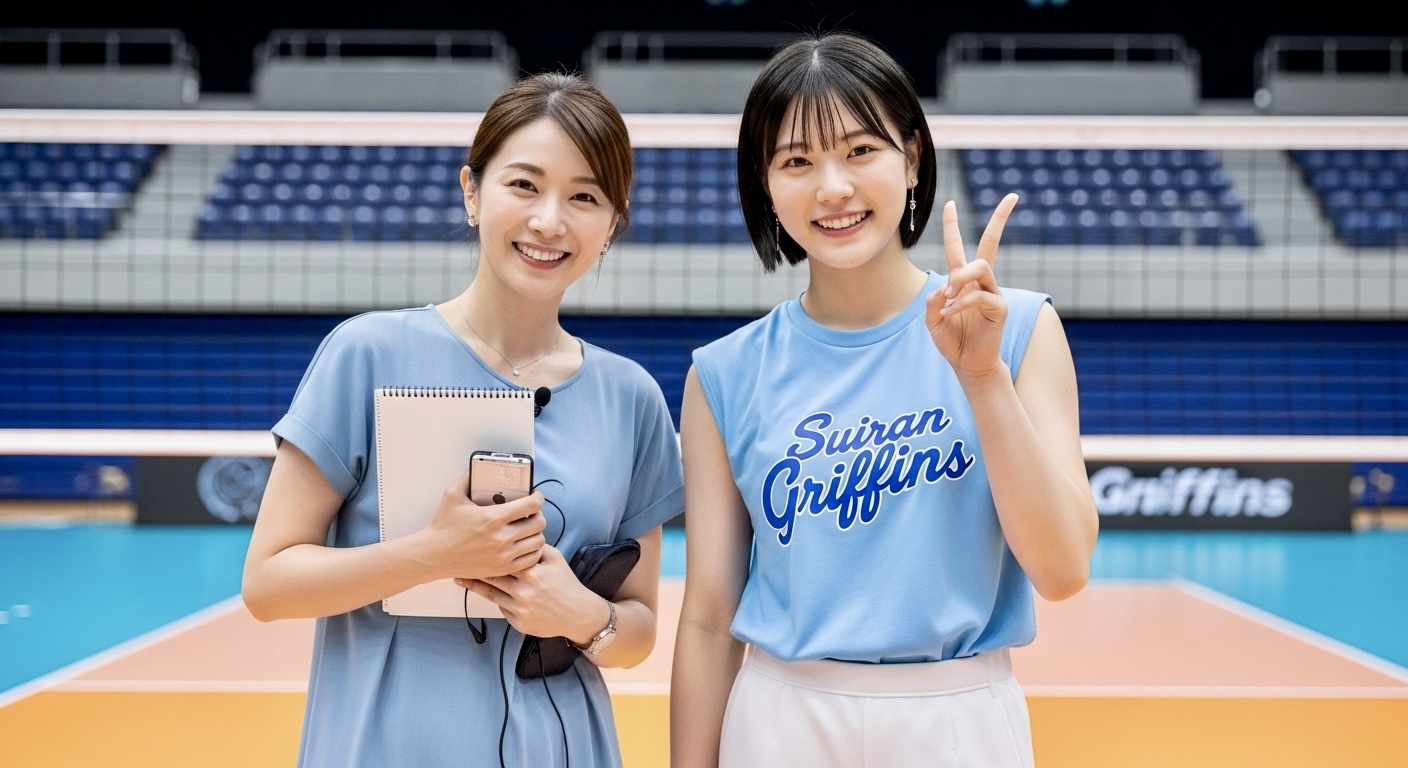
Yuka Yamamoto is an outside hitter who commands the court with precision and power. While majoring in education at university, she balances a demanding schedule of practices and games, and is known for being a dependable presence both on and off the court. With a combination of charisma, discipline, and genuine friendliness, she brings energy and warmth to her team—and to everyone around her.
In this interview, we sat down with Yuka to explore what “staying true to yourself” really means through the lens of volleyball.
■“Inspired by a single spike” – How it all started at a middle school tryout
Aoki: To begin, can you take us back to when you first felt drawn to volleyball? What sparked that interest?
Yuka: It was during a club activity tryout in middle school. Usually, those days are kind of casual—you just go around and observe. But on that particular day, something hit me. I watched a senior land a perfect spike, and the atmosphere in the gym changed completely. It wasn’t just “I want to try this”—it was “I have to do this.”
Aoki: You remember the moment vividly.
Yuka: Absolutely. The sound, the tension—it’s still clear in my mind. That was the first time I realized how volleyball can move people in an instant.
Aoki: Before that, were you more into individual activities?
Yuka: Yes. I did K-pop dance all through elementary school and even performed on stage. I’ve always loved moving my body, but volleyball was the first time I experienced the feeling of being part of a team.
Aoki: Did that shift your perspective on team sports?
Yuka: At first, I was all about the spike. Like, “If I can hit hard, that’s all that matters.” But over time, I came to appreciate the weight of each receive and set. Every play is built on someone else’s effort. Eventually, I started seeing the game in 3D, not just tunnel vision for scoring.
Aoki: So that one moment changed how you approached the sport?
Yuka: Exactly. It stopped being just about the points. I started thinking about why this point matters now—what kind of energy it brings to the team. That’s when the idea of “changing the air” through play really took root for me.
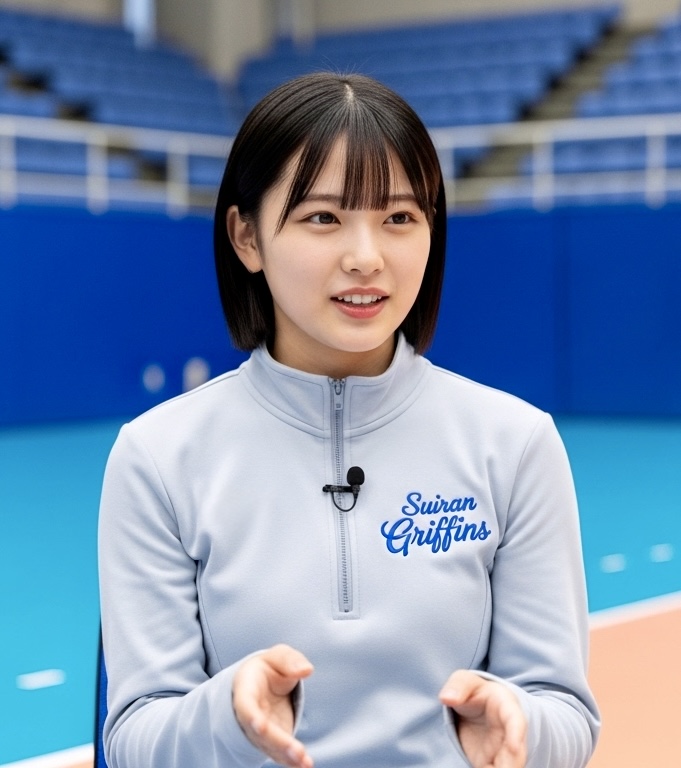
■“What I found after hitting a wall” – Lessons from high school struggles
Aoki: Moving from middle school to high school, did your playing style or mindset shift?
Yuka: Definitely. In middle school, effort and energy could carry you a long way. But in high school, suddenly I wasn’t good enough. For the first time, I honestly thought, “Maybe I should quit.” The game felt too big for me.
Aoki: What helped you push through that?
Yuka: I had a teammate I was competing with for the same position. We started doing extra practices together—sometimes we fought, but eventually we realized we both wanted the same thing: to improve. That shared struggle turned us into true teammates.
Aoki: So it shifted from rivalry to trust?
Yuka: Yes. At first, I saw her as someone I couldn’t lose to. But after working side by side, we started cheering each other on. Now, I carry that mindset into my current team. When things don’t click in practice, I try to talk it out instead of letting it fester.
Aoki: That willingness to face things directly builds stronger bonds.
Yuka: Exactly. It’s scary, but when you confront things honestly, you build real trust. And that trust shows up in how you play.
■ “Both Learning and Real Matches” — Living Both College and Team Life
Aoki: Balancing university and team life must be pretty tough, right? Both in terms of time and energy?
Yuka: Yes, it is. To be honest, there are days when I lose some sleep, haha. But actually, studying education at university has helped me realize a lot. For example, how deep the act of “communicating” really is. Even in volleyball, when giving advice to younger teammates, I started choosing my words more carefully by imagining their level of understanding and how they might be feeling.
Aoki: So what you learn in class is directly helping you communicate within the team.
Yuka: Yes. I’ve come to realize that “teaching” isn’t about “getting someone to understand,” but more about “helping them realize something.” So instead of just saying “Do it this way,” I ask, “How would you feel if you try this?” When I do that, their reaction changes too.
Aoki: Do your experiences with the team ever help you in your university classes?
Yuka: Definitely. Sensing the atmosphere in a match or making quick decisions—those skills actually help a lot in presentations and group work. Like noticing who wants to speak, or when it’s my turn to support the group.
Aoki: The ability to read people seems important in both environments.
Yuka: I agree. Also, in volleyball, when I’m not playing well, figuring out how to reset myself is really important. And it’s the same in my studies. On days I can’t focus, I try not to force it. Instead, I think about how to get myself back on track.
Aoki: So balancing both isn’t just about getting everything done.
Yuka: Right. At first, I was tense and trying to go “all out” on both sides. But now, I feel like each side actually feeds the other. Going back and forth between learning and real competition makes me grow in both areas.
■”That One Point Changed Everything”—Matches with the Griffins and Building Trust with Teammates
Aoki: Do you have any memorable matches from when you first joined the team?
Yuka: I still vividly remember the first match where I was in the starting lineup. At the beginning, I made several mistakes and couldn’t get into the flow. But in the middle of the second set, I landed a cross-court spike that completely shifted the atmosphere.
Aoki: That sparked the whole team, didn’t it?
Yuka: Yes. Right after that, Marina (Marina Hasegawa) smiled and said, “Nice one!” Her words felt like a signal that calmed me down. We’re classmates at university too, so it really warmed my heart.
Aoki: What kind of support did you receive specifically?
Yuka: Misaki-san (Misaki Kawabata) told me, “I get your intention better now, so leave it to me next time.” Thanks to those words, I was able to spike more confidently.
Aoki: That’s very reassuring.
Yuka: Also, Shiori-san (Shiori Onishi) often said, “Stay calm, I’ve got it,” and picked up the ball for me many times. There was a real sense of trust in the air—like they believed in me.
Aoki: Sounds like trust naturally circulates within the team.
Yuka: Exactly. Marina’s one comment, Misaki-san’s support, Shiori-san’s stable defense… each person supports others naturally. That experience might be where my idea of “changing the atmosphere” through play first began.
Aoki: So that one point flipped the team’s switch.
Yuka: Yes. And after that day, I started hearing my teammates say things like, “Yuka’s playing with more confidence.” That made me want to become someone who can influence the team’s energy.
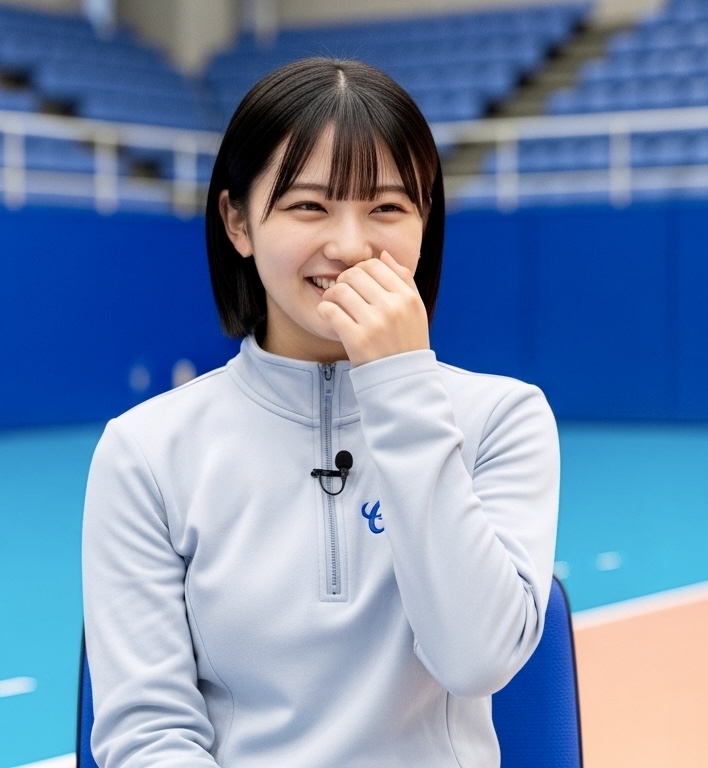
■”Time to Reconnect With Myself”—Everyday Life and Personal Hobbies
Aoki: What do you usually do on your days off?
Yuka: I mostly spend them relaxing. I clean my room while playing music, or just space out at a café nearby. Lately, I’ve been carrying around a notebook to jot down reflections on practice or random thoughts.
Aoki: Do you write things other than volleyball stuff?
Yuka: Yes, I do. Actually, I think play and emotions are deeply connected. Like, “My decisions were slow today,” or “I couldn’t focus during warm-up.” I try to keep it short, lining up feelings and facts. I read an article about Shohei Ohtani keeping a daily review journal, and I wanted to try something like that.
Aoki: So you’re using your own words to look at yourself objectively.
Yuka: Yeah. Matches and practices often blur in my memory. But when I write things down in the moment, I can notice even small changes in myself.
Aoki: That already sounds like professional awareness.
Yuka: I don’t know if it’s that serious, haha. But by keeping it up, I’ve developed a habit of “thinking before acting.” Especially on game days, I divide the notebook into two sections: one for mental preparation, and one for post-match review.
Aoki: Putting things into words helps reset your mind.
Yuka: Yes. That’s why I even open my notebook when I’m away from volleyball. When I feel like I’m rushing lately, I can notice my mental patterns. Writing really is powerful!
■”I Want to Say Thank You”—The Power of the Fans
Aoki: I imagine you get a lot of messages from fans through social media. How do you feel when you see them?
Yuka: I’m super happy! I once got a comment saying, “That one play gave me chills!” after a match. I’ll never forget that message.
Aoki: Did it match your own feeling at that moment?
Yuka: Exactly. I had thought, “Yes! That was a good one!” And knowing that came through really encouraged me. It felt like that play didn’t just end within myself.
Aoki: That must be one of the most rewarding moments for an athlete.
Yuka: Yes. Knowing someone is watching gives me real strength. And sometimes, even people I don’t know write things like, “Your expression was great today.” It touches me to realize they’re noticing such fine details.
Aoki: So social media plays an important role in connecting you with fans.
Yuka: Definitely. Words have real power. Even through a screen, they reach me. That’s why when I post something, I try to express my gratitude and positive feelings honestly.
Aoki: It’s like playing catch with the fans.
Yuka: Yes, exactly. Of course, returning the favor through my play is ideal, but I also want to deliver my thoughts through words first.
■Lastly—What It Means to “Change the Atmosphere”
Aoki: Lastly, what does “changing the atmosphere” mean to you?
Yuka: In one phrase, it means “being someone who notices and acts.” Like, if someone looks uneasy, I speak to them first. Or if the mood feels down, I try to bring a bit of brightness.
Aoki: That goes beyond just the game, doesn’t it?
Yuka: Yes, it’s not limited to on-court moments. Of course, changing the flow of the game through play is ideal, but even on the bench or during travel, I try to notice things like “this atmosphere feels a little heavy” and take action. I want to be that kind of presence.
Aoki: That might be what makes you “Yuka Yamamoto.”
Yuka: If that’s the case, I’d be so happy. I want to be the kind of teammate who makes others feel safe just by being there. If I can be that, then I think my presence on this team has real meaning.
Aoki: I think you’re already fulfilling that role.
Yuka: (Smiling shyly) I wonder… But I want to keep showing up and doing my best, step by step, so I can truly become that kind of person!
Carrying her gratitude for her teammates and fans in her heart, Yuka Yamamoto continues to put meaning into every play as someone who can “change the atmosphere.” Her brightness and the effort she has built up with sincerity are clearly bringing comfort and momentum to her team. To encourage someone else. To enjoy herself along the way.
Yuka’s mindset continues to gently light up the air around the Griffins today.
▶ Next time, we’ll feature an interview with Aya Takahashi, a key player known for her composure and strength in supporting the team. Stay tuned.